 Radical Trainer
The fire radical: 火 and 灬
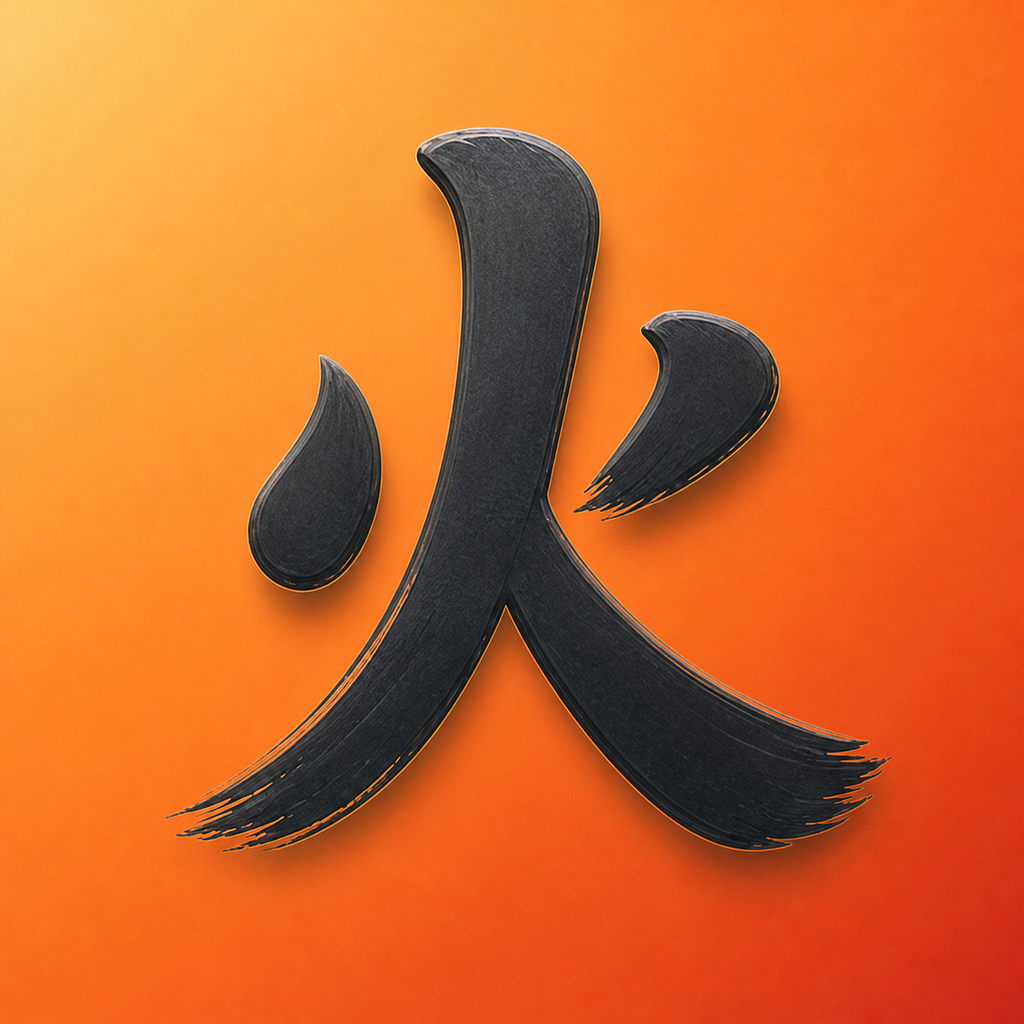
火 huǒ means fire and has four strokes. It often appears on the left, as in 灯 dēng (lamp), or as four dots 灬 at the bottom, as in 热 rè (hot). Those four dots are a strong hint, but not every 灬 means fire.
Two forms
| Form | Strokes | Position | Example |
|---|---|---|---|
| 火 | 4 | alone or on the left, slightly narrowed | 灯 dēng lamp |
| 灬 | 4 | bottom | 热 rè hot |
Both forms have four strokes. 灬 is written as four short dots from left to right along the bottom of the character.
Fire, heat, light, cooking
The fire component often shows up in words about heat or cooking:
- 灯 dēng: lamp, light
- 烧 shāo: burn, cook
- 热 rè: hot
- 炒 chǎo: stir-fry
- 烤 kǎo: roast, bake
- 煮 zhǔ: boil
None of these is read huǒ. The fire component tells you about meaning; each character keeps its own pronunciation, which you learn separately.
When 灬 is not about fire
Four dots at the bottom do not always mean fire in a modern word. Look at these:
- 点 diǎn: dot, o'clock
- 黑 hēi: black
- 熊 xióng: bear
- 然 rán: so, like that, as in 当然 dāngrán (of course)
Explanations for why these characters have 灬 vary, and some involve old meanings that have drifted. For a beginner, the practical rule is simple: treat 灬 as a possible fire hint, then let the word and sentence decide.
Spot it on a menu
Chinese menus are a good place to see the fire component at work. Dishes described with 炒, 烤, 烧, or 炸 zhá (deep-fry) all carry it. Try reading a menu and circling every cooking method that contains 火 or 灬.
Recognition drill
For each character, identify a visible 火 or 灬 shape, then say whether its everyday meaning relates to fire or heat: 炸 黑 灯 杰 烤 煮.
Show answers
- 炸 zhá (deep-fry): 火 on the left; related to cooking
- 黑 hēi (black): 灬 at the bottom; meaning is a color, not fire
- 灯 dēng (lamp): 火 on the left; related to light
- 杰 jié (outstanding): 灬 at the bottom; not related to fire
- 烤 kǎo (roast): 火 on the left; related to cooking
- 煮 zhǔ (boil): 灬 at the bottom; related to cooking
Learning fire through story
If you prefer learning through a game, Chinese Radical Realms at chineseradicals.com introduces 火 together with 水, 木, 土, and 山 in its first region, using story dialogue, meanings, pinyin, and tracing. Any characters you meet there are fictional memory aids, not explanations of where 火 came from.
Continue with the water radical guide, which pairs naturally with fire, or check yourself in the starter quiz. The wood radical guide covers another nature radical.